| |
|
 |
|
Home
Search
Print
Login
Bookmark
Matches 1 to 41 of 41 » Thumbnails Only
| |
Thumb |
Description |
Linked to |
| 1 |
 | |
|
| 2 |
 | |
|
| 3 |
 | |
|
| 4 |
 | |
|
| 5 |
 | |
|
| 6 |
 | |
|
| 7 |
 | |
|
| 8 |
 | |
|
| 9 |
 | |
|
| 10 |
 | |
|
| 11 |
 | |
|
| 12 |
 | |
|
| 13 |
 | |
|
| 14 |
 | |
|
| 15 |
 | 1841 Census |
|
| 16 |
 | 1841 Census - Princes Road, Lambeth |
|
| 17 |
 | 1841 Census Sloane Square |
|
| 18 |
 | 1841 Census; Serle Street, Camden, Holborn, London WC2A |
|
| 19 |
 | 1861 Census, Sloane Square, Chelsea |
|
| 20 |
 | 1874 probate record |
|
| 21 |
 | Avril |
|
| 22 |
 | Bill and Betty |
|
| 23 |
 | Bird's-eye view of Furnival's Inn, Holborn, City of London, c1750. Bird's-eye view of Furnival's Inn, Holborn, City of London, c1750.
0220005608
City of London / Heritage-Images
City of London, England
Sutton Nicholls (creator),Sutton Nicholls,
Copyright © City of London/Heritage-Images
|
|
| 24 |
 | birth record |
|
| 25 |
 | Birth record of Meriel |
|
| 26 |
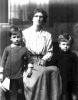
 | Carrie and boys |
|
| 27 |
 | Christening record 16th Aug 1775 |
|
| 28 |
 | Gravestone Christopher Welbank, St Mary, South Cowton, Yorks
and William his son. |
|
| 29 |
 | Gravestone of Christopher Welbank of Aldborough |
|
| 30 |
 | Jemima Welbank nee Jones |
|
| 31 |
 | label on back of Jemima's portrait |
|
| 32 |
 | London, England, Freedom of the City Admission Papers, 1681-1925 |
|
| 33 |
 | London. England, Freedom of the City Admission Papers, 1681-1925 Freedom of the City 26 Jan 1768 |
|
| 34 |
 | London. England, Freedom of the City Admission Papers, 1681-1925 record for James Welbank 1794: James Welbank son of Christopher Welbank late of Southampton Buildings Holborn in the County of Middlesex Gentleman deceased |
|
| 35 |
 | Mount Pleasant, Yafforth Road, Northallerton, DL7 8UE A New Lease of Life
November 17, 2007
By Chris Lloyd
AFTER 20 years of emptiness and dereliction, a Grade I listed house which literally spawned a generation or two, is coming back to life.It is The Mount, ironically just down the road from B&Q, on the edge of Northallerton where every baby in the district was born between 1939 and 1988.On Wednesday, to mark its new use as a care home at the other end of the age scale, the mayor of Northallerton is due to plant a time capsule into The Mount's soil is the very soil on which the English army mustered prior to the Battle of the Standard in 1138. The battle was fought a couple of miles north, on Cowton Moor, when a smaller English army routed the Scottish - "an execrable army, savager than any race of heathen" - in less than two hours. The Scots advanced at daybreak on a misty August morn and were mown down by the English archers who fired so many arrows that each of the fallen looked "like a hedgehog with its quills." The house was built on the muster spot around 1780, a fine symmetrical Georgian pile with a grand drive sweeping up to a noble front door. It was a private house, belonging initially to the landowning Welbank family, although it was large enough 100 years later to be turned into a preparatory school for about 50 boys. It entered public use as a maternity hospital just 36 hours after the outbreak of the Second World War. THE authorities, fearing a wave of civilian casualties caused by an onslaught of German air raids, threw up eight temporary wooden huts to act as wards (so temporary they did service for 60 years) on fields once occupied by a Carmelite Friary. They also created extra ward space by moving the maternity unit from the cottage hospital on the High Street, the building near the roundabout in the centre of Northallerton with the incongruously splendid window.This cottage hospital, endowed by the Rutson family, had opened in October 1877 although it wasn?t until December 1884 that anyone got round to donating it a bath. Anyway, the expected wave of civilian casualties didn't materialise and it wasn't until after British forces were rescued from Dunkirk on June 4, 1940, that the wooden huts of the Friarage Hospital received their first military cases. The expected wave of pregnancies didn't materialise, either, for in its first year The Mount only delivered nine babies. These were pre-NHS days and so babies had to pay to be allowed into the world. An infant paid £1 1s per week for its stay, and its mother had to find £4 4s a week. The creation of the NHS on July 5, 1948, ended the charging, and by the 1980s, more than 700 babies a year were being churned out at The Mount. The emergency wartime maternity hospital was stood down on January 31, 1987, when its services were transferred to the Friarage. Since then, it has stood sadly derelict, drivers stuck in the queue for the level crossing peering through the bricked up gateways and wondering why no modern use could be found for such a fine-looking building. On Wednesday, though, there will be celebrations to mark its formal opening as a 64-bedroomed Barchester care home: the rebirth of the old maternity hospital.
(c) 2007 Northern Echo. Provided by ProQuest Information and Learning. All rights Reserved
Source: redOrbit (http://s.tt/13Wt6)
|
|
| 36 |
 | Paul Robert Welbank |
|
| 37 |
 | Richard birth record |
|
| 38 |
 | Richard William Welbank |
|
| 39 |
 | Robert and John |
|
| 40 |
 | Robert and John |
|
| 41 |
 | William Welbank of Greenwich Will 1753 |
|
|
|
|